

Fibroid Attached to the Uterus: What Is It and How Does It Develop?
This article is for general information only and does not replace an individual medical evaluation.
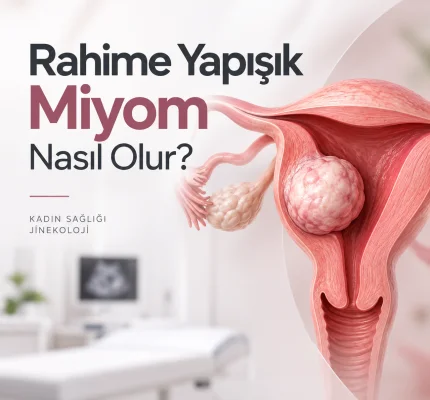
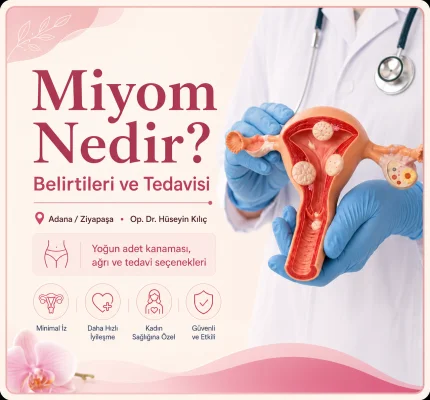
"Fibroid attached to the uterus" is a phrase patients often use for fibroids in the uterine wall or growing into the uterine cavity. Medically, fibroids are mostly benign growths of the uterine muscle. Submucosal fibroids growing into the cavity are particularly relevant for heavy bleeding and some fertility problems. Treatment depends on location, number, symptoms, age and pregnancy plans, not just size. In Ziyapaşa, Adana, Op. Dr. Hüseyin Kılıç creates individual follow-up or treatment plans based on these factors.
What Is It?
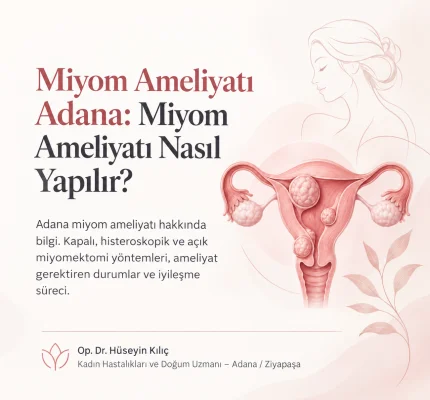
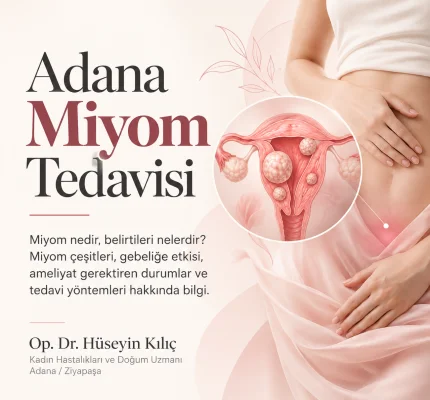
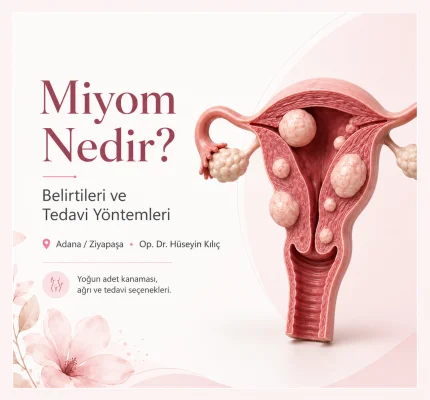
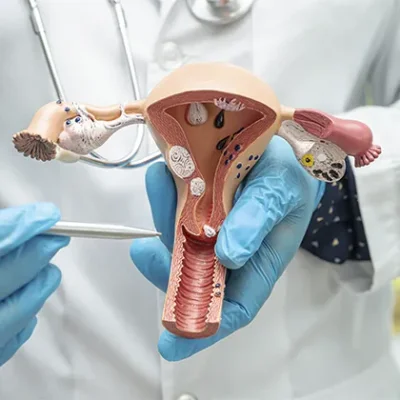
- Intramural: within the muscular wall.
- Submucosal: grows from the wall into the cavity.
- Subserosal: grows toward the outer surface.
- Pedunculated: attached by a stalk.
The popular term does not refer to one specific medical type; it is usually used for fibroids broadly connected to the wall or extending into the cavity.
How Does It Develop?
The exact cause is unknown. Hormones, especially estrogen and progesterone, and genetic and personal factors are thought to play a role. As a fibroid grows, it may stay in the wall or extend inward or outward; its exact location determines symptoms and treatment options.
Symptoms
Some fibroids cause no symptoms. Others may cause heavy or prolonged periods, painful periods, bleeding between periods, pelvic pain, pressure, frequent urination, constipation, painful intercourse, anemia and difficulty conceiving. Fibroids affecting the cavity are especially associated with heavy bleeding, which over time can cause iron deficiency and anemia with fatigue, dizziness or shortness of breath.
Pregnancy
Not every fibroid prevents pregnancy. Submucosal fibroids may affect implantation in some patients and may be associated with infertility or recurrent pregnancy loss. However, other possible causes of infertility must also be assessed. Location, size, number and whether the cavity is distorted are evaluated by ultrasound.
Is It Dangerous?
Fibroids are generally benign and many can be monitored. Closer evaluation is needed with very heavy bleeding, anemia, severe pain, pressure on the bladder or bowel, effects on pregnancy plans or notable change during follow-up.
Diagnosis
Ultrasound shows number, size, position and relation to the cavity. Hysteroscopy, sonohysterography, HSG or MRI may be used for more detail; hysteroscopy allows direct view of fibroids in the cavity.
Should It Be Removed?
Not every fibroid needs surgery; small, symptom-free fibroids can be followed. Treatment may be considered with heavy bleeding, anemia, severe pain, pressure symptoms, a distorted cavity, suspected link to infertility or significant change. There is no single size threshold.
Surgical Methods
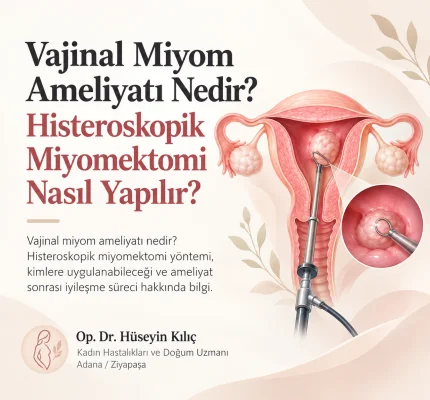
Hysteroscopic Myomectomy
For suitable submucosal fibroids, a thin camera is passed through the vagina and cervix into the cavity, without an abdominal incision.
Laparoscopic Myomectomy
For suitable fibroids in the wall or on the outer surface, the fibroid is removed through small incisions and the uterus is preserved.
Open Surgery
May be needed for very large, numerous or difficult-to-reach fibroids.
Fibroid surgery does not necessarily mean removing the uterus: myomectomy preserves it, while hysterectomy is a different operation for other clinical situations.
Will It Go Away? What If It Is Not Removed?
Some fibroids stay the same, others grow; some shrink near menopause, but not in everyone. Untreated symptomatic fibroids may cause ongoing bleeding, anemia, pain, pressure or fertility issues, so regular check-ups are important.
Frequently Asked Questions
Can it be treated without surgery?
In suitable patients, follow-up, medication to control bleeding and some interventional methods may be considered.
Can it be removed by hysteroscopy?
Some suitable submucosal fibroids can, depending on size and depth.
Treatment in Adana
Op. Dr. Hüseyin Kılıç evaluates fibroids at his clinic in Ziyapaşa, Adana, and plans individual follow-up or treatment. Patients from Seyhan, Çukurova, Yüreğir and Sarıçam with heavy periods, pelvic pain or pressure can contact the clinic.