

At What Size Should Fibroids Be Removed?
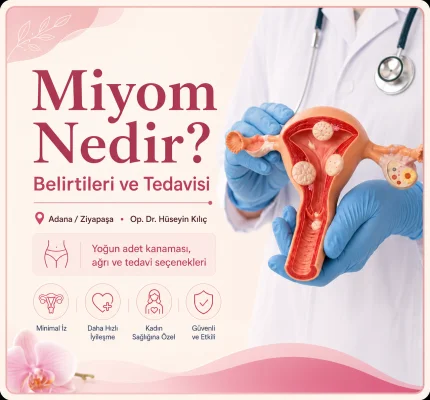
The first question many women ask after a fibroid is found is “How big is it, do I need surgery?” But the decision is not based on size alone.
Op. Dr. Hüseyin Kılıç decides on follow-up or treatment individually at his clinic in Ziyapaşa, Adana.
This content is for general information only.
Is Size Decisive?
No. Fibroids that cause no symptoms, do not grow and do not affect pregnancy can often be monitored with regular ultrasound. Yet even a 2 cm fibroid growing into the uterine cavity can cause heavy bleeding or infertility.
Typical Threshold
Fibroids larger than 5–6 cm, especially if symptomatic or growing, are more often considered for surgery – but this is not a strict rule. Key factors:
- Symptoms: heavy periods, anemia, pelvic pain, frequent urination, constipation
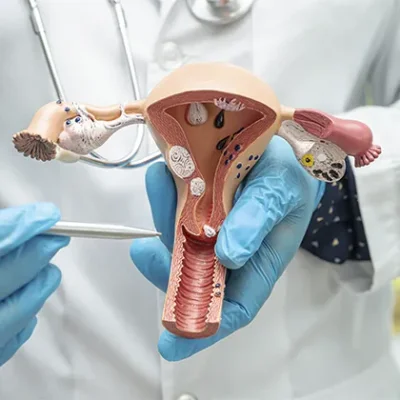
- Location: submucosal fibroids can cause problems even when small
- Rapid growth
- Pregnancy plans
- Age and closeness to menopause
- Pressure on bladder, bowel or ureters
If Surgery Is Not Needed
Ultrasound every 6–12 months, medication for bleeding, iron for anemia.
Surgical Options
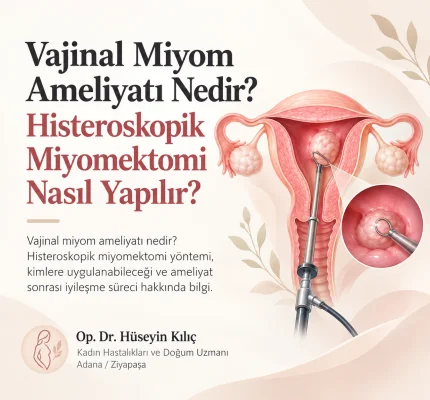
Laparoscopic myomectomy, hysteroscopic myomectomy and open myomectomy.
In Adana
Patients from Seyhan, Çukurova, Yüreğir, Sarıçam and other districts are evaluated at our clinic in Ziyapaşa. Please contact our clinic.
FAQ
Is a 3 cm fibroid operated on?
Usually monitored if symptom-free; treatment may be needed if it is submucosal and causes bleeding or infertility.