

Fibroid Surgery in Adana: How Is Fibroid Surgery Performed?
This article is for general information only; whether surgery is needed and which method is used is decided after an individual evaluation.
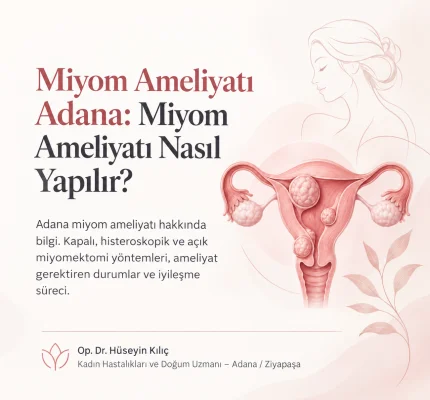
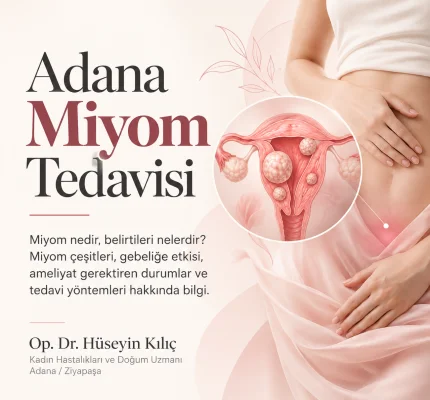
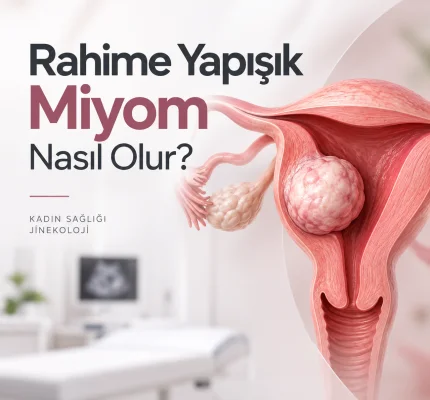
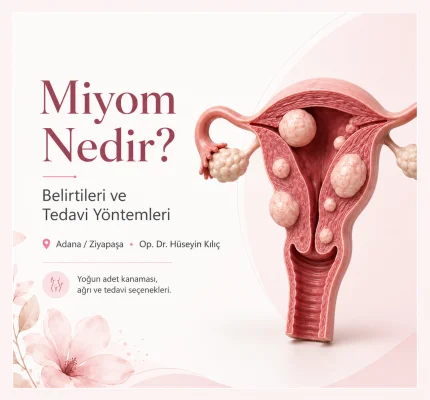
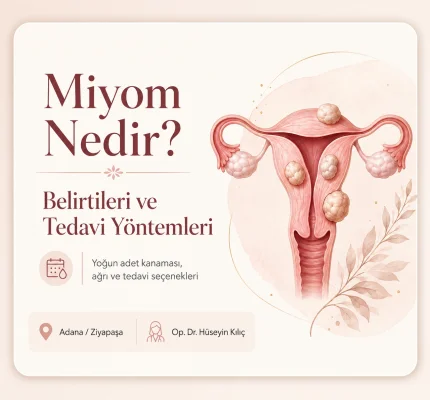
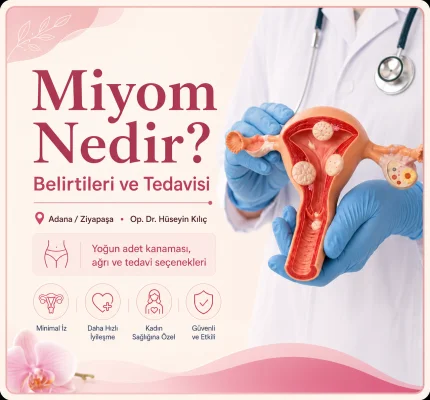
Fibroids (myomas) are mostly benign growths arising from the muscle layer of the uterus. Not every fibroid needs surgery, but it may be considered in cases of heavy bleeding, anemia, pain, pressure on nearby organs or some pregnancy-related problems. The decision depends not only on size but also on location, number, symptoms, growth and pregnancy plans. Op. Dr. Hüseyin Kılıç evaluates patients with fibroids in Ziyapaşa, Adana.
Symptoms and Types
Fibroids may cause heavy, prolonged or clotted periods, pelvic pain, bloating or pressure, frequent urination, constipation, anemia and pregnancy-related problems. Location is important:
- Submucosal: grows into the uterine cavity; linked to heavy bleeding and some pregnancy problems.
- Intramural: within the muscle wall; may enlarge the uterus and increase bleeding and pain.
- Subserosal: grows outward; may press on the bladder or bowel.
- Pedunculated: attached by a stalk, inside or outside the uterus.
When Is Surgery Needed?
Surgery may be considered for heavy or prolonged bleeding, anemia, severe or persistent pain, marked pressure, bladder or bowel compression, fibroids distorting the uterine cavity, some fertility problems, large or changing fibroids and symptoms that significantly affect daily life. There is no single centimeter limit: a small submucosal fibroid may cause heavy bleeding while a larger subserosal one may cause few complaints. Size, location, number, symptoms and pregnancy plans are assessed together.
Surgical Methods
Myomectomy
Myomectomy removes only the fibroids and preserves the uterus. It can be performed hysteroscopically, laparoscopically or as open surgery.
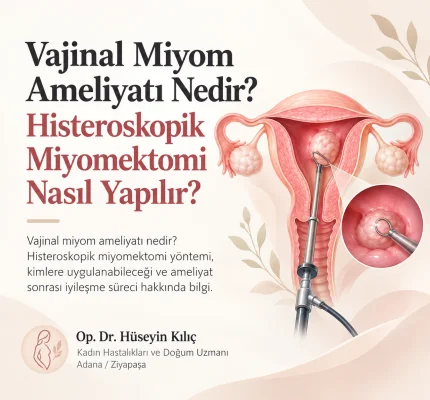
Hysteroscopic Myomectomy
For suitable submucosal fibroids, a thin camera instrument is passed through the vagina and cervix into the uterine cavity and the fibroid is removed without an abdominal incision. Fibroids extending deep into the muscle or very large ones may need another method.
Laparoscopic (Keyhole) Myomectomy
Through a few small abdominal incisions, the uterus is reached with a camera and the fibroids are removed. In suitable patients this may mean smaller scars, a shorter hospital stay and a faster return to daily life, but not every fibroid is suitable.
Open Myomectomy
Very large, numerous or technically unsuitable fibroids may require removal through an abdominal incision.
Is the Uterus Removed?
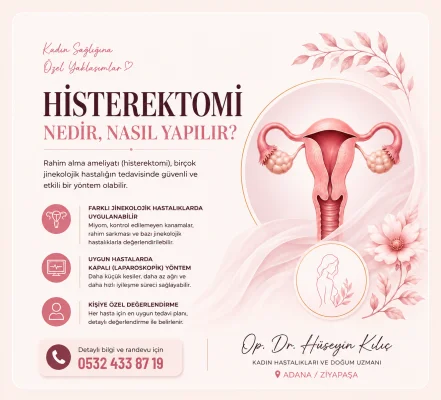
No, fibroid surgery does not automatically mean removal of the uterus. Myomectomy preserves it; hysterectomy (removal of the uterus) is a different operation that may be considered depending on the number and size of fibroids, age, wish for children and other conditions.
Pregnancy, Birth and Recurrence
Because the uterus is preserved, pregnancy may be possible after myomectomy, depending on age, ovarian reserve, fibroid location and the extent of surgery. The waiting time and mode of delivery are decided individually; a cesarean section is not always required, but previous surgery must be reported to the obstetrician. A removed fibroid does not grow back, but new fibroids may develop elsewhere, so regular check-ups are important.
Recovery
Recovery is usually fastest after hysteroscopic surgery, followed by laparoscopic and then open surgery. Light bleeding may occur, but heavy bleeding, increasing pain, high fever, foul-smelling discharge or fainting require medical evaluation. Return to sexual activity is decided at the follow-up visit. Risks include bleeding, infection, injury to nearby organs, adhesions and anesthesia-related risks.
Frequently Asked Questions
Must every fibroid be operated on?
No. Some fibroids without symptoms can be monitored.
Are vaginal and keyhole fibroid surgery the same?
No. Hysteroscopy reaches the uterus through the cervix without an abdominal incision; laparoscopy uses small abdominal incisions.
Fibroid Evaluation in Adana
Op. Dr. Hüseyin Kılıç evaluates fibroids with examination and imaging at his clinic in Ziyapaşa, Adana, aiming to choose a suitable method and preserve the uterus where possible. Patients from Seyhan, Çukurova, Yüreğir and Sarıçam can contact the clinic.