

Genital Warts: What Causes Them and How Are They Treated?
This article is for general information only and does not replace a personal medical consultation.
Genital warts are small raised skin lesions that may appear around the vagina, vulva, cervix, anus or groin, and are mostly associated with HPV (human papillomavirus). Rather than feeling embarrassed or waiting, it is important to see a gynaecologist, because not every lump in the genital area is a wart: cysts, polyps or infection-related swelling can look similar. At the clinic of Op. Dr. Hüseyin Kılıç in Ziyapaşa, Adana, each patient is evaluated individually, and laser removal can be planned for suitable patients.
What Are Genital Warts?
They are usually small, skin-coloured or slightly raised lesions, single or multiple, sometimes cauliflower-like, and sometimes too small to notice. They can occur at the vaginal entrance, vulva, cervix, groin, around the anus and perineum, and in men on and around the penis. In women they are sometimes seen only during examination inside the vagina or on the cervix.
What Causes Them?
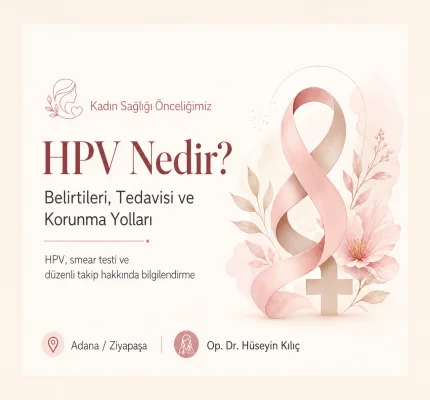
The most common cause is HPV, a widespread virus transmitted through skin and sexual contact. Wart-causing types are mostly low-risk, while other types are linked to cervical cell changes; having warts therefore means HPV follow-up and cervical screening should not be neglected. Risk factors include unprotected sex, contact with an HPV-positive partner, multiple partners, weakened immunity, previous HPV and missed check-ups. HPV often causes no symptoms for a long time.
Symptoms
Possible signs include small raised or pinkish lesions, a cauliflower-like appearance, itching, burning, tenderness, discomfort during intercourse, lumps around the anus and lesions increasing over time. These signs alone are not enough for a diagnosis.
Diagnosis
Diagnosis is usually made by clinical examination of the appearance, location, number and spread of lesions. Self-diagnosis or random pharmacy products are not advisable. According to the CDC, HPV testing is not routinely recommended to diagnose genital warts.
How Are They Treated?
Warts may shrink or disappear in some people but grow, multiply or recur in others. Treatment aims to remove visible warts, relieve symptoms and limit spread, but does not eliminate HPV completely, so follow-up matters. Options include laser removal, cryotherapy, electrocauterisation, topical medication, surgical excision and follow-up; the choice depends on location, number, extent and the patient's condition.
Laser Removal of Genital Warts
Laser treatment helps remove warts in a controlled way in suitable patients and may be preferred for widespread, recurrent or certain located warts after evaluation. Besides removal, patients should be informed about HPV, smear/HPV follow-up and protection.
Recurrence and Prevention
Warts can recur because treatment removes visible lesions but not the virus. Immunity, HPV type, general health and partner status influence recurrence. Prevention includes discussing HPV vaccination with your doctor, regular gynaecological check-ups and screening, condom use, postponing intercourse and seeing a doctor if a suspicious lesion appears, and informing the partner. HPV and genital warts are not the same: HPV is the virus, warts are visible lesions some types cause.
Frequently Asked Questions
Do genital warts go away on their own?
Some shrink or disappear, others grow or recur, so evaluation is recommended.
Can they be removed with laser?
Yes, in suitable patients; the method is decided after examination.
Does treatment eliminate HPV?
No, it removes visible warts but not the virus.
Is every genital lump a wart?
No. Cysts, polyps or infections can look similar; examination is needed.
In Adana
Genital warts are a health problem to be evaluated, not a cause for shame. Patients from Seyhan, Çukurova, Yüreğir and Sarıçam can contact the clinic of Op. Dr. Hüseyin Kılıç in Ziyapaşa, Adana, for evaluation and treatment planning.