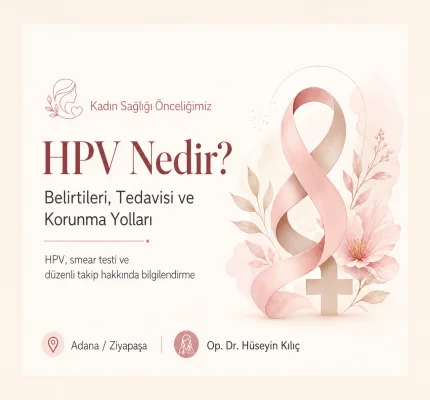


Pap Smear Test in Adana: When and How Is It Done?
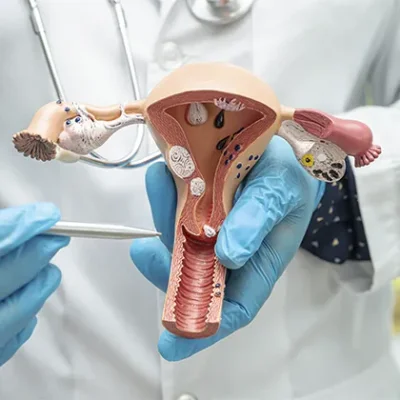
A Pap smear test is a screening test in which cells taken from the cervix are examined under a microscope. Its aim is to detect cell changes that could develop into cervical cancer early, before any symptoms appear.
Cervical cancer is one of the cancers that can largely be prevented with regular screening. That is why Pap smear and HPV testing are an important part of routine women’s health check-ups.
Op. Dr. Hüseyin Kılıç performs Pap smear and HPV tests during gynecological examinations at his clinic in Ziyapaşa, Adana, and reviews the results together with his patients.
This content is for general information only. Screening frequency and test choice should be determined individually.
What Is a Pap Smear?
During a Pap smear, a sample of cells is taken from the surface of the cervix with a small brush or spatula. The sample is examined in a laboratory and any abnormal cell changes are reported.
Today, the Pap smear is often performed together with, or in addition to, an HPV test. HPV (Human Papillomavirus) is the main cause of cervical cancer.
When Should a Pap Smear Be Done?
Screening programs vary between countries, but the general approach is:
- For sexually active women, screening usually starts around the age of 21–25.
- Between the ages of 30 and 65, HPV and/or Pap smear tests are repeated at regular intervals.
- In Turkey, the Ministry of Health screening program recommends an HPV test every 5 years for women aged 30–65.
- Women with previous abnormal results, a weakened immune system or certain risk factors may need more frequent testing.
The best approach is to decide on the right screening interval with your doctor based on your age and previous results.
How Is a Pap Smear Done?
A Pap smear is a simple procedure performed during an examination and takes only a few minutes:
- You lie on the gynecological examination table.
- A speculum is used to make the cervix visible.
- A cell sample is taken from the cervix with a special brush.
- The sample is transferred into a liquid container or onto a slide and sent to the laboratory.
You may feel slight pressure or discomfort; it is usually not painful. Light spotting may occur afterwards and passes quickly.
How to Prepare for a Pap Smear
- The test should be done when you are not menstruating. About one week after your period ends is a suitable time.
- Avoid sexual intercourse, vaginal douching, vaginal creams or suppositories for 48 hours before the test.
- If you have an active vaginal infection, treatment may be recommended first.
What Do Pap Smear Results Mean?
Results are usually available within 1–2 weeks. Common terms in reports include:
- Normal (negative): No abnormal cells were found. Routine screening continues.
- ASC-US: Atypical cells of undetermined significance. Usually followed up with an HPV test or repeat smear.
- LSIL: Low-grade cell changes, generally related to HPV infection and often regress on their own.
- HSIL and other advanced changes: Require further evaluation.
An abnormal Pap smear does not mean you have cancer. However, in some cases a colposcopy, in which the cervix is examined under magnification, and a biopsy if necessary, may be recommended.
Can a Pap Smear Be Done During Pregnancy?
Yes. A Pap smear can be safely performed during pregnancy and does not harm the baby. If screening is due, your doctor may schedule it during pregnancy follow-up.
Do Women Who Had the HPV Vaccine Still Need a Pap Smear?
Yes. The HPV vaccine protects against the most common cancer-causing HPV types, but not all of them. Vaccinated women are therefore advised to continue regular screening.
Pap Smear Test in Adana
Patients from Seyhan, Çukurova, Yüreğir and surrounding districts of Adana can have a gynecological examination together with Pap smear and HPV testing at our clinic in Ziyapaşa. Once the results are ready, a follow-up or further testing plan is created if needed.
Please contact our clinic for appointments and information.
Frequently Asked Questions
Does a Pap smear hurt?
Usually not. You may feel brief, mild pressure or cramping.
How long does it take to get the results?
Depending on the laboratory, results are usually available within 1–2 weeks.
Is a Pap smear necessary after menopause?
Yes, screening generally continues until the age of 65. Your doctor will decide whether to continue based on your previous results.