

Safe Abortion in Adana: How Is the Process Planned?
This article is for general information only. The term "safe abortion" does not mean that any procedure is completely risk-free.
When a pregnancy is unwanted or cannot be continued, people want to know how the procedure is performed, which methods are used and what matters for patient safety. Beyond the procedure itself, determining the gestational week, confirming an intrauterine pregnancy, reviewing the medical history and arranging appropriate follow-up are all important. Op. Dr. Hüseyin Kılıç evaluates patients at his clinic in Ziyapaşa, Adana, according to their health and the characteristics of the pregnancy.
What Does "Safe Abortion" Mean?
Medically, it means the procedure is performed by a gynecologist, after the necessary preliminary assessments, in a setting that meets medical standards. Key elements include:
- determining the gestational week,
- confirming the pregnancy is inside the uterus,
- asking about existing illnesses and medications,
- reviewing bleeding and infection risks,
- planning a post-procedure check-up.
The same approach may not suit every patient, so the process should be individually planned.
Checks Before the Procedure
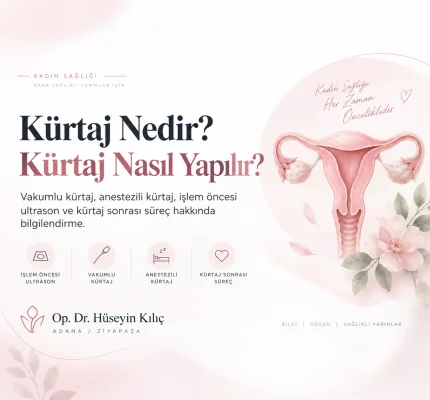
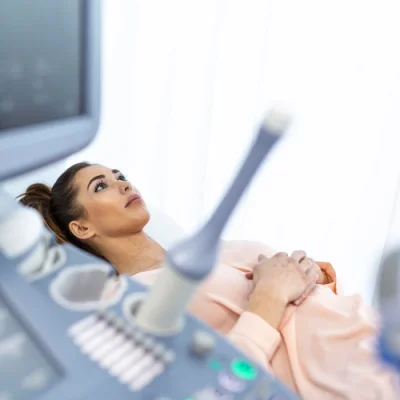
Ultrasound
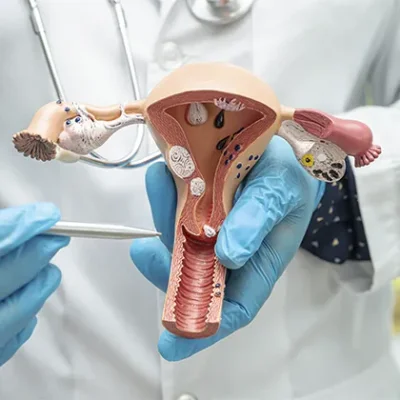
It shows whether the pregnancy is inside the uterus, the approximate gestational week and the state of the sac. Ruling out an ectopic pregnancy is important, as it is not treated with a standard intrauterine procedure.
Medical History
Chronic illnesses, previous surgeries, medications, blood thinners and drug or anesthesia allergies are reviewed; additional tests may be requested if needed.
Vacuum Aspiration
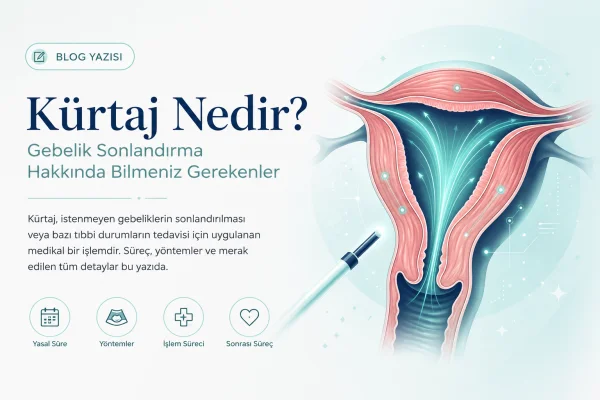
One of the methods used to end early pregnancies: pregnancy tissue is removed in a controlled way with a special vacuum system. The method is chosen considering the gestational week, ultrasound findings, health and previous procedures.
Duration and Anesthesia
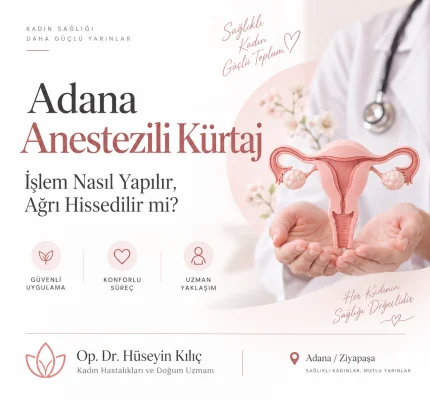
The procedure itself is usually not lengthy surgery, but total time includes assessment, preparation and a period of observation. Different anesthesia or pain-control options may be used depending on health, gestational week, the procedure and anesthesia risks. Rather than claiming it is "completely painless", it is more accurate to say pain control is planned individually.
After the Procedure
Light bleeding, spotting or period-like cramps may occur for a while; recovery differs between patients. Follow the doctor's advice and attend the planned check-up. Seek medical evaluation for very heavy bleeding, increasing or severe abdominal pain, high fever, foul-smelling discharge, fainting or marked weakness. The first period varies. Ovulation can begin before it, so contraception should be discussed.
Does Abortion Cause Infertility?
After a procedure under appropriate conditions, the ability to become pregnant is preserved in most women. However, no medical intervention is completely risk-free; rarely, infection, intrauterine adhesions or complications involving the uterus or cervix may occur.
Privacy
Ending a pregnancy is a very personal health matter, and patient information should be handled within the principles of confidentiality. Sharing questions openly with the doctor helps plan the process correctly.
What to Look For
Not only price or duration matter: the procedure should be performed by a gynecologist, with prior ultrasound, determination of the gestational week, review of medical history, explanation of the method, aftercare advice and a follow-up plan. The most suitable method is decided after examination and ultrasound, not online.
Frequently Asked Questions
Is bleeding after abortion normal?
Light bleeding or spotting may occur; heavy bleeding, high fever or severe pain require medical evaluation.
Is a check-up necessary?
If the doctor considers it necessary, a check-up is important to assess recovery and the uterine cavity.
In Adana
Patients from Seyhan, Çukurova, Yüreğir, Sarıçam and other Adana districts can contact the clinic of Op. Dr. Hüseyin Kılıç in Ziyapaşa, Adana, for detailed information and assessment.