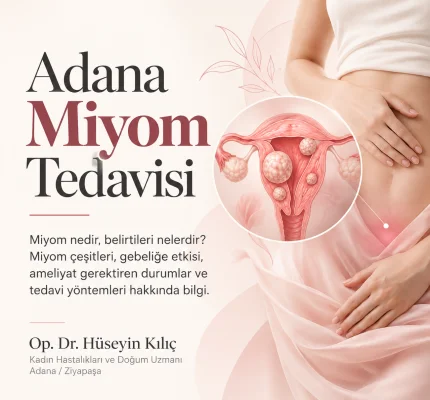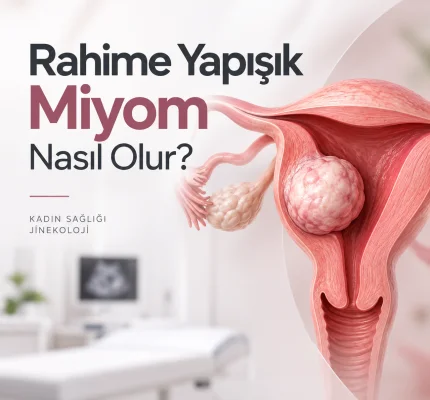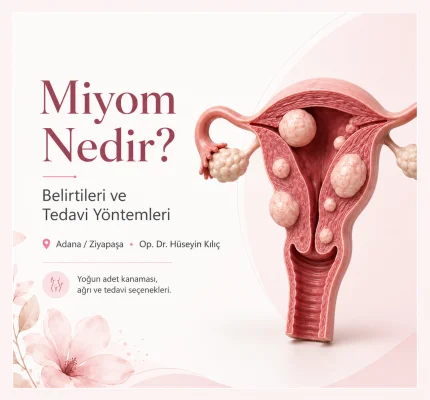


Types of Fibroids
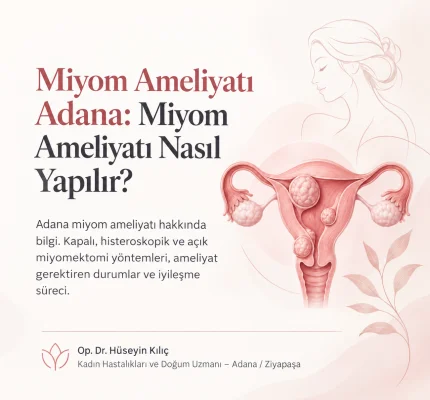
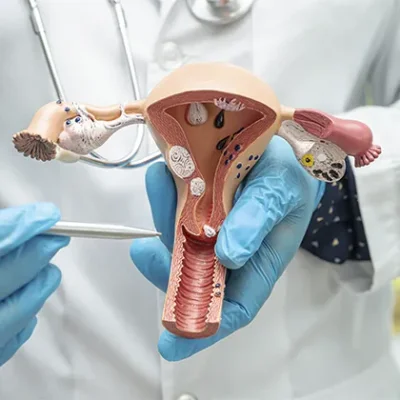
Terms like “intramural”, “subserosal” or “pedunculated” describe the fibroid’s location, which largely determines symptoms and treatment. Op. Dr. Hüseyin Kılıç plans treatment accordingly at his clinic in Ziyapaşa, Adana.
This content is for general information only.
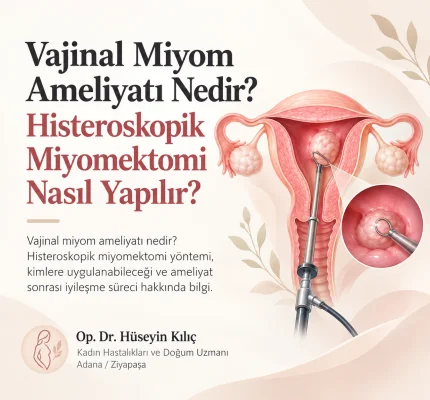
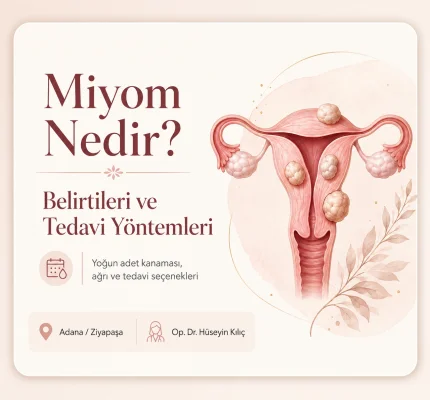
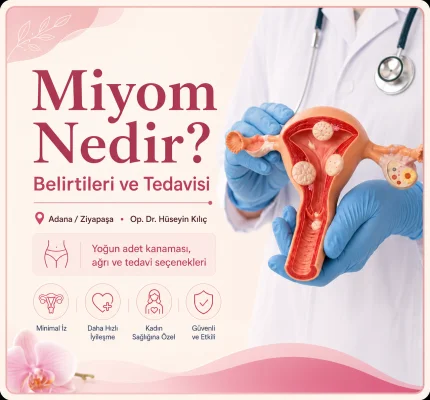
Submucosal (Toward the Cavity)
Grows into the uterine cavity; even when small can cause heavy bleeding, anemia, infertility and miscarriage. Often removed hysteroscopically without incisions.
Intramural (Within the Wall)
The most common type. Usually symptom-free when small; larger ones can increase bleeding and pain or affect pregnancy if they distort the cavity.
Subserosal (Toward the Outside)
Grows outward; usually does not affect bleeding or fertility, but large ones can press on the bladder or bowel.
Pedunculated
Attached by a stalk, inside or outside the uterus. External ones can rarely twist (torsion) causing sudden severe pain – an emergency. Usually easy to remove.
Other Locations
Rarely in the cervix or between the ligaments, requiring special surgical planning.
Why Type Matters
A 2 cm submucosal fibroid may need treatment while a 5 cm subserosal one may only need monitoring.
In Adana
Patients from Seyhan, Çukurova, Yüreğir, Sarıçam and other districts are evaluated at our clinic in Ziyapaşa. Please contact our clinic.