

Vacuum Abortion in Adana: How Is Vacuum Aspiration Performed?
This article is for general information only. The suitable method for each patient must be determined by a gynecologist.
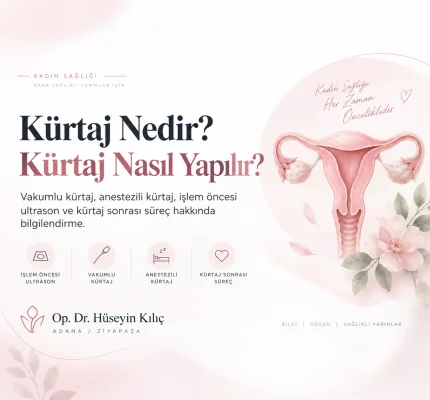
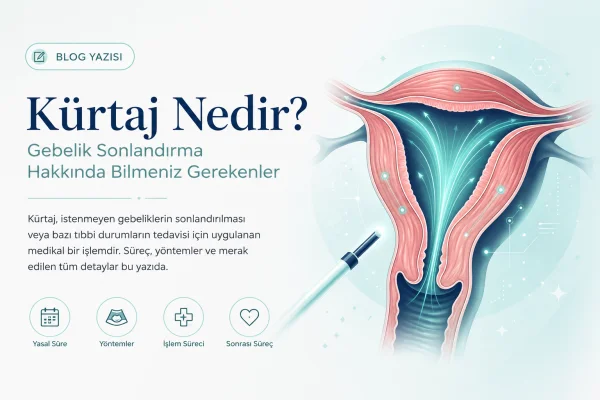
People researching vacuum abortion in Adana usually ask how it is done, whether anesthesia is used, how long bleeding lasts and whether future pregnancies are affected. Vacuum aspiration is one of the methods that can be used at suitable gestational weeks. Before it is planned, the gestational week must be determined, the intrauterine pregnancy confirmed and general health assessed. Op. Dr. Hüseyin Kılıç evaluates the suitability of the method at his clinic in Ziyapaşa, Adana, based on the gestational week and ultrasound findings.
What Is Vacuum Aspiration?
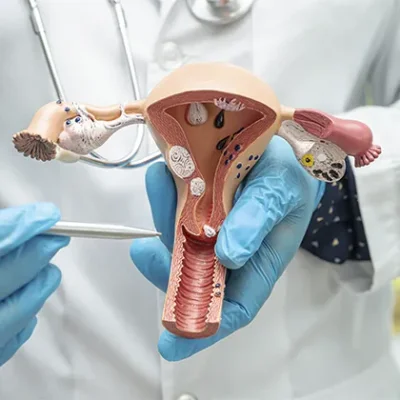
It is a method in which pregnancy tissue is removed from the uterus in a controlled way using a special vacuum system. The technique is planned according to the gestational week, uterine structure, general health, previous abortions or births and ultrasound findings, so it may not be suitable for every patient.
Examination Beforehand
How Is the Gestational Week Determined?
The last period date gives an idea, but ultrasound provides more detail: gestational week, location in the uterus and characteristics of the sac.
Why Is Ectopic Pregnancy Ruled Out?
An ectopic pregnancy implants outside the uterus and cannot be treated with standard vacuum aspiration, which is why ultrasound is important, especially in early pregnancy.
How Is It Performed?
It is carried out by a gynecologist in a suitable medical setting. The uterus is reached through the cervix with appropriate instruments and the pregnancy tissue is removed with a vacuum system. Details depend on the gestational week, uterine structure, previous births and the anesthesia method, and are decided after examination.
Is It Different from "Normal" Abortion?
In everyday language "normal abortion" may refer to different techniques. Vacuum aspiration uses suction; the older sharp curettage is not the same technique.
Pain and Anesthesia
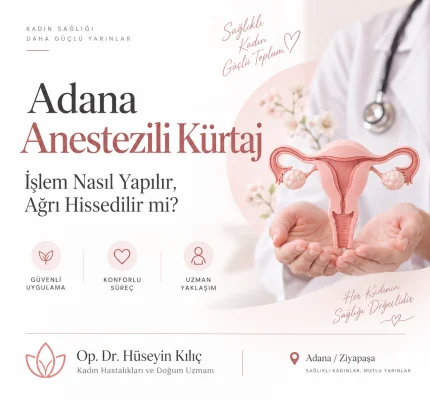
Pain depends on the anesthesia method, gestational week, pain threshold and cervical structure; no procedure can be promised to be completely painless. In suitable patients local anesthesia, sedation or, where appropriate, other anesthesia methods may be used. Fasting may be required beforehand. Period-like cramps may follow.
Duration
The procedure itself is usually short; total clinic time includes examination, ultrasound, preparation, anesthesia and observation.
After the Procedure
Light bleeding, spotting and cramps may occur; very heavy bleeding is not normal. Seek care for heavy bleeding, severe or increasing pain, high fever, foul-smelling discharge, fainting or severe dizziness. The first period varies; ovulation can occur before it, so contraception should be discussed. Fertility is preserved in most women after a procedure under appropriate conditions; rare complications include infection, retained tissue, bleeding, injury and adhesions. Sexual intercourse should be paused for the period the doctor advises. A check-up may be planned; unusual complaints should be reported without waiting for it.
What to Consider
Decisions should not be based only on price or duration. Determining the week, ultrasound, confirming intrauterine location, medical history, method choice and anesthesia options all matter, as does proper follow-up.
Frequently Asked Questions
Can vacuum abortion be done under anesthesia?
In suitable patients it can be performed with anesthesia or sedation.
Can pregnancy occur again afterwards?
Yes, since ovulation may start before the first period.
In Adana
Patients from Seyhan, Çukurova, Yüreğir, Sarıçam and other Adana districts can contact the clinic of Op. Dr. Hüseyin Kılıç in Ziyapaşa, Adana, for an examination and ultrasound assessment.