

Hysterectomy in Adana: Uterus Removal and Laparoscopic Surgery
This article is for general information only and does not replace an individual medical evaluation.
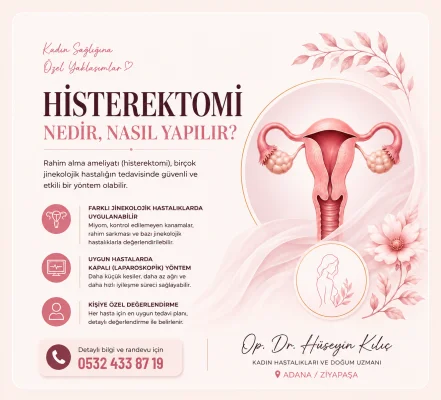
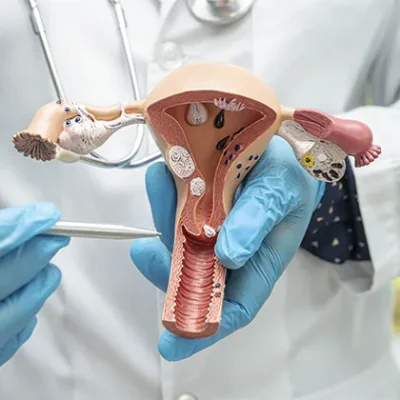
Hysterectomy is the surgical removal of the uterus. It may be considered for fibroids, uterine prolapse, abnormal bleeding that cannot be controlled and certain gynecological diseases. However, it is not a standard procedure for every patient: the decision depends on symptoms, age, the underlying condition, wish for children and other treatment options. Op. Dr. Hüseyin Kılıç plans individualized treatment and surgery at his clinic in Ziyapaşa, Adana.
What Is a Hysterectomy?
The extent of surgery varies. Removing only the uterus is not the same as also removing the cervix or the ovaries. Whether the ovaries are preserved is assessed separately according to age, disease and medical need, so the answer to "Will my ovaries also be removed?" differs from patient to patient.
When Is It Performed?
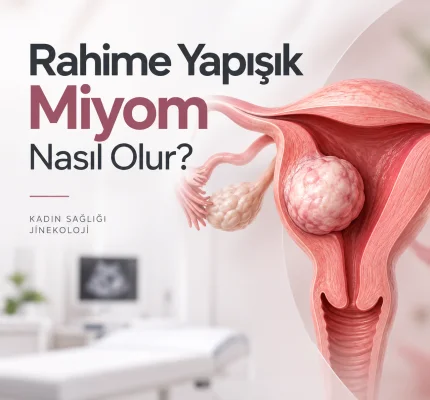
- Large fibroids or fibroids causing serious complaints
- Abnormal uterine bleeding not controlled by other methods
- Advanced uterine prolapse
- Some cases of endometriosis and adenomyosis
- Some cancers or precancerous conditions of the uterus and cervix
- Some chronic gynecological problems that do not respond to other treatments
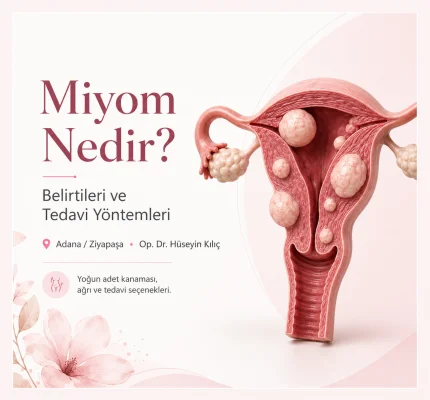
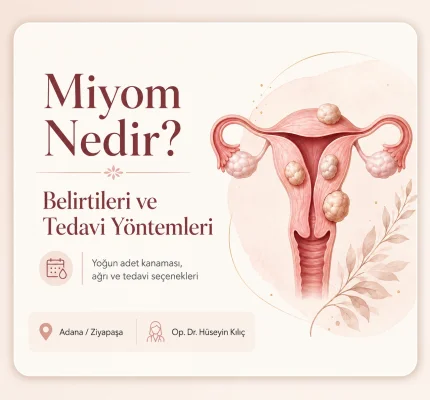
Not every patient with fibroids needs a hysterectomy; uterus-preserving options may be available.
How Is It Performed?
The main approaches are open surgery, vaginal hysterectomy and laparoscopic (keyhole) hysterectomy. The choice depends on the size of the uterus, the reason for surgery, previous operations, anatomy and the surgeon's assessment.
What Is Laparoscopic Hysterectomy?
It is performed with a camera and special instruments through small abdominal incisions. In suitable patients it may offer smaller incisions, less postoperative pain, a shorter hospital stay and a faster return to daily life. Not every patient is suitable; examination and imaging results are considered together.
Does Removing the Uterus Cause Menopause?
Not by itself. The ovaries determine menopause: if they are preserved, hormone production may continue. If both ovaries must be removed, menopausal symptoms may appear after surgery. After the uterus is removed, there are no more periods and pregnancy is not possible.
Does It Affect Sexual Life?
Effects vary between individuals and depend on the reason for surgery, the method, whether the ovaries are preserved, recovery and general health. When to resume intercourse should be decided by the surgeon at follow-up.
Recovery
Recovery varies with the method and the patient; after laparoscopic surgery some patients return to daily life sooner than after open surgery. Avoid heavy lifting, avoid intercourse for the period advised, care for the wounds and attend check-ups. Severe or increasing pain, heavy bleeding, fever, shortness of breath or unusual complaints require medical attention.
Is It Risky?
Hysterectomy is a common gynecological operation but, like all surgery, carries risks: bleeding, infection, anesthesia complications, blood clots and injury to the bladder, bowel or urinary tract. Personal risks should be discussed with the doctor beforehand.
Frequently Asked Questions
Can I get pregnant after a hysterectomy?
No, pregnancy is not possible.
Is hysterectomy always open surgery?
No. Vaginal or laparoscopic methods can be used in suitable patients.
Is the uterus always removed if there are fibroids?
No. Size, location, symptoms, age and pregnancy plans are considered.
Can everyone have a laparoscopic hysterectomy?
No. The method is chosen according to the medical situation and the reason for surgery.
Hysterectomy in Adana
Before deciding, it should be assessed whether surgery is truly necessary, whether a uterus-preserving option exists and which method suits the patient. Op. Dr. Hüseyin Kılıç provides this evaluation at his clinic in Ziyapaşa, Adana. Patients from Seyhan, Çukurova, Yüreğir and Sarıçam can contact the clinic.