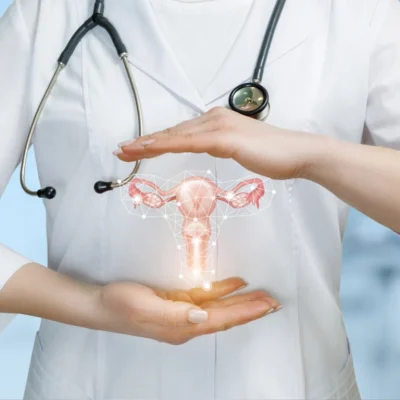


What Are Uterine Fibroids? Symptoms, Types and Treatment Options
This article is for general information only; diagnosis and treatment must be planned individually by a gynecologist.
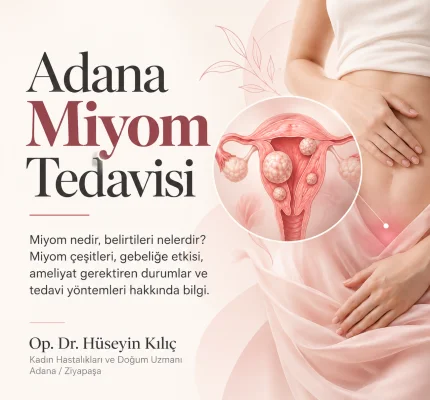
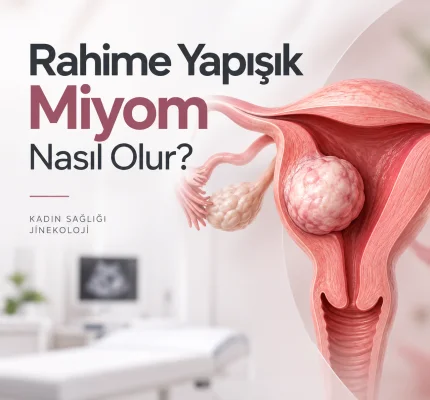
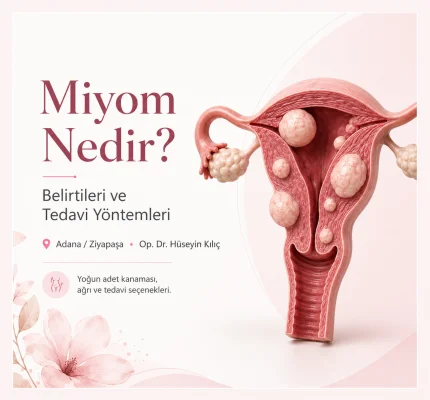
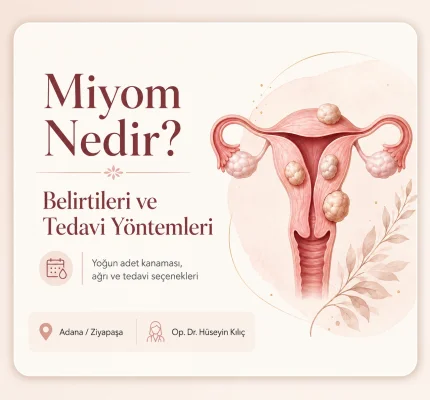
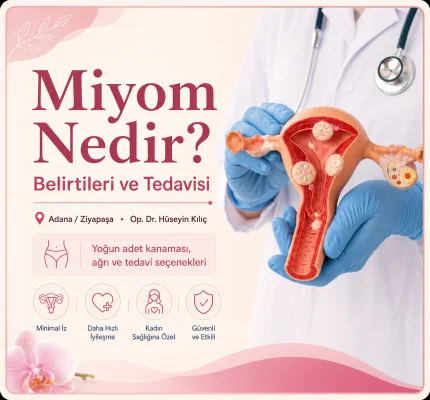
Fibroids (myomas, leiomyomas) are growths arising from the smooth muscle and connective tissue of the uterus, and the vast majority are benign. They are common in women of reproductive age. Some cause no complaints, while others lead to heavy periods, pelvic pain, pressure, frequent urination or pregnancy-related problems. Location, number, growth and symptoms matter as much as size. Op. Dr. Hüseyin Kılıç evaluates patients with fibroids in Ziyapaşa, Adana.
Symptoms
- Heavy or prolonged periods, large clots
- Pelvic pain or pressure, bloating or fullness
- Frequent urination, constipation or pressure on the bowel
- Pain during intercourse
- Iron deficiency and anemia
- Difficulty conceiving or some pregnancy problems
If heavier bleeding is accompanied by fatigue, palpitations or shortness of breath, anemia should be checked.
Causes
The cause is not fully understood; hormonal factors and genetic predisposition are thought to play a role. Estrogen and progesterone can influence growth, so fibroids are more common in the reproductive years and many shrink after menopause. A uterine mass that grows or causes new complaints after menopause should be evaluated.
Types
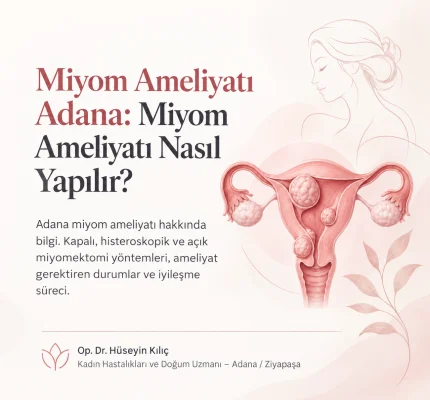
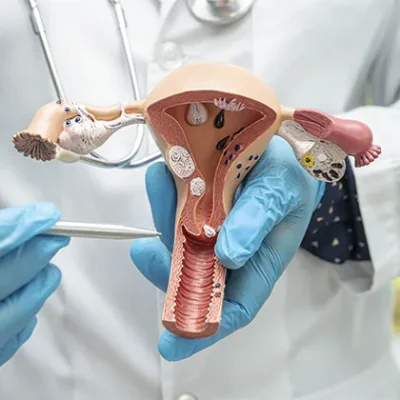
- Submucosal: grows into the cavity; even small ones can cause heavy or intermenstrual bleeding and may matter for pregnancy.
- Intramural: within the muscle wall; can enlarge the uterus and cause bleeding, pain or pressure.
- Subserosal: grows outward; mainly causes pressure on the bladder or bowel.
- Pedunculated: attached by a stalk, inside or outside the uterus.
Size or Location?
There is no single "dangerous" size. A small submucosal fibroid may cause heavy bleeding or pregnancy problems, while a larger subserosal one may cause few symptoms.
Anemia, Bloating and Urinary Symptoms
Fibroids causing heavy bleeding can lead to iron-deficiency anemia; both the anemia and its cause should be addressed. Fibroids do not cause fat gain, but large or multiple fibroids can enlarge the uterus and make the lower abdomen look fuller. Fibroids at the front can press on the bladder; those at the back can press on the bowel and cause constipation.
Fibroids and Pregnancy
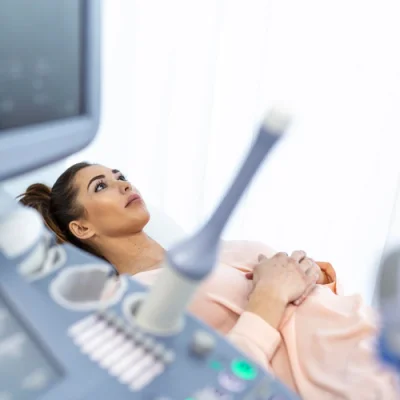
Not every fibroid prevents pregnancy. Fibroids distorting the cavity may affect implantation or pregnancy, whereas some outer fibroids have little effect. Women planning pregnancy should have an ultrasound evaluation.
Is Surgery Always Necessary?
No. Fibroids without symptoms that do not change and do not affect pregnancy can be monitored. Bleeding, pain, pressure, anemia, pregnancy plans and location guide the decision. Some fibroids stay stable for years; others grow and cause complaints, so regular, individual follow-up is needed.
Surgical Options
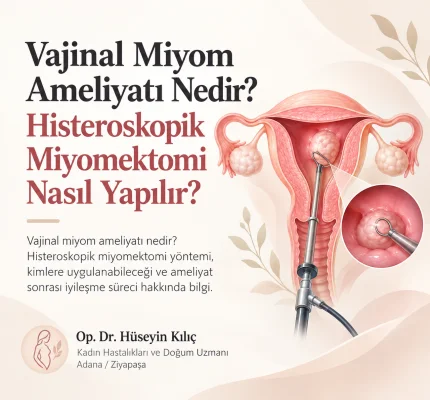
Myomectomy removes only the fibroids and preserves the uterus; hysterectomy may be considered in some patients depending on age, number and size of fibroids, bleeding, other conditions and pregnancy plans. In suitable patients surgery can be hysteroscopic (for fibroids in the cavity) or laparoscopic (for suitable fibroids in the wall or on the surface). A removed fibroid does not return, but new ones can develop, so follow-up continues after surgery.
Frequently Asked Questions
Are fibroids cancer?
The vast majority are benign, but masses that grow after menopause or look unusual on imaging need detailed evaluation.
Do fibroids cause weight gain?
Not metabolically, but large fibroids can increase abdominal volume.
Do fibroids shrink by themselves?
They may shrink after menopause due to hormonal changes.
Fibroid Treatment in Adana
At his clinic in Ziyapaşa, Adana, Op. Dr. Hüseyin Kılıç evaluates fibroids by examination and ultrasound and informs patients about follow-up, medication, hysteroscopic procedures or myomectomy. Patients from Seyhan, Çukurova, Yüreğir and Sarıçam can contact the clinic.