

Hysteroscopy in Adana: Treatment of Uterine Polyps and Septum
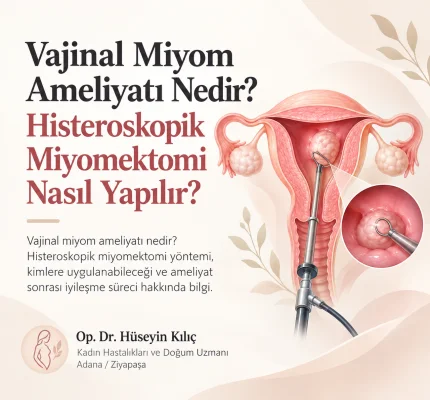
Hysteroscopy is a procedure in which a thin camera (hysteroscope) is passed through the cervix to view the inside of the uterus directly. No abdominal incision is made. Diagnosis and treatment can be performed in the same session.
Op. Dr. Hüseyin Kılıç evaluates patients with abnormal uterine bleeding, uterine polyps, septum or recurrent pregnancy loss for hysteroscopy at his clinic in Ziyapaşa, Adana.
This content is for general information only. The decision for the procedure is made individually.
Who Needs Hysteroscopy?
- Women with irregular, prolonged or intermenstrual bleeding
- Women with postmenopausal bleeding
- Women with a polyp or thickening inside the uterus on ultrasound
- Women with a uterine septum
- Women needing evaluation of the uterine cavity due to recurrent miscarriage or infertility
- Suspected intrauterine adhesions (Asherman syndrome)
- A displaced or irretrievable IUD
- Submucosal fibroids growing into the uterine cavity
Treatments Performed with Hysteroscopy
- Polypectomy: Polyps are removed and sent for pathology.
- Septum resection: The wall dividing the uterus is cut to restore a normal cavity, which may improve pregnancy outcomes in septum-related recurrent miscarriage.
- Release of adhesions
- Removal of submucosal fibroids
- Targeted biopsy
How Is Hysteroscopy Performed?
Diagnostic hysteroscopy can sometimes be performed in the clinic (office hysteroscopy). Operative hysteroscopy is usually done under short anesthesia.
- A thin hysteroscope is inserted through the cervix.
- The uterine cavity is distended with fluid to obtain a clear view.
- The problem is treated with fine instruments.
The procedure usually takes 15–45 minutes and most patients go home the same day.
Best Timing
Hysteroscopy is usually scheduled in the first days after the period ends, when the uterine lining is thin and the view is clearer. Pregnancy must be ruled out beforehand.
After Hysteroscopy
- Light bleeding or discharge may last a few days.
- Mild cramping is relieved with simple painkillers.
- Most people return to daily life within 1–2 days.
- Waiting 1–2 weeks before intercourse, tampons and swimming is usually advised.
- Seek medical advice for fever, severe pain or heavy bleeding.
Hysteroscopy in Adana
Patients from Seyhan, Çukurova, Yüreğir, Sarıçam and other districts of Adana are evaluated at our clinic in Ziyapaşa with examination and ultrasound; if hysteroscopy is needed, the process is planned in detail.
Please contact our clinic to make an appointment.
Frequently Asked Questions
Is hysteroscopy painful?
Operative hysteroscopy is done under anesthesia, so no pain is felt during the procedure. Office hysteroscopy may cause brief cramping.
When can I try to conceive after hysteroscopy?
It depends on the procedure; after polyp removal, usually from the next cycle. For septum and adhesion treatment, your doctor will advise on timing.
Can polyps come back?
They may recur in some patients, so regular check-ups are recommended.